Kyoto, Kansai
Ryokans in Kyoto
The one city where the inn is the attraction rather than a place to sleep between temples. Most are wooden townhouses of a few rooms, and most are not hot spring inns at all.
What a Kyoto ryokan includes is the first thing to understand, because it differs from the countryside.
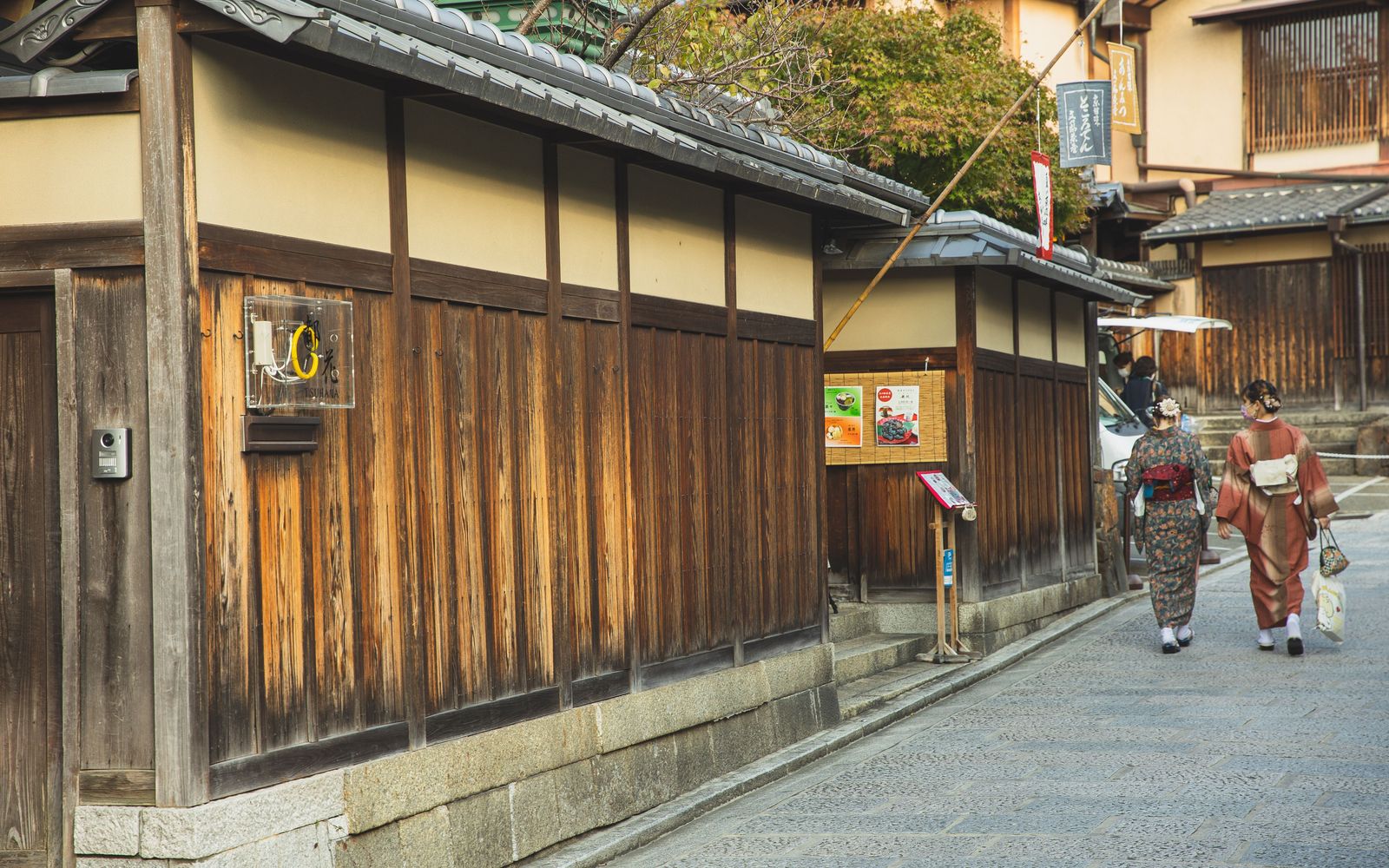
Photo: Pexels
Kyoto at a glance
- Getting here
- About two and a quarter hours from Tokyo by shinkansen; around 75 minutes from Kansai Airport by direct express
- What the inns are
- Wooden townhouses and garden inns, often under ten rooms
- Hot springs
- Rare in the centre; found at Arashiyama, Kurama and Ohara on the edges
- Meals
- Breakfast is common, dinner often is not. Check the plan before you book
Ryokans we are featuring in Kyoto
Kyoto has very little hot spring water, so we started with the inns that have it: two in Arashiyama and one in the hills at Kurama. Machiya listings in the centre follow.
-
'/%3E%3Ccircle cx='618' cy='120' r='52' fill='%23F4F0E4' opacity='.45'/%3E%3C/svg%3E)
Arashiyama Onsen
Hanaikada
Thirteen rooms at the south end of Togetsukyo bridge, with the only viewing open-air bath in Arashiyama, rooms that have their own hot spring bath, and kaiseki served in the room.
- Rooms
- 13
- From
- ¥24,000 per person
- Last checked
- 22 Sep 2026
Official site Rate from Rakuten Travel -
'/%3E%3Ccircle cx='618' cy='120' r='52' fill='%23F4F0E4' opacity='.45'/%3E%3C/svg%3E)
Kurama
Kurama Onsen
Five rooms in the cedar hills half an hour north of the city, on naturally welling sulphur water. Day visitors until 21:00, after which the baths belong to guests. Tattoos are permitted.
- Rooms
- 5
- From
- Direct booking only
- Last checked
- 22 Sep 2026
Official site No listing on the sites we checked -
'/%3E%3Ccircle cx='618' cy='120' r='52' fill='%23F4F0E4' opacity='.45'/%3E%3C/svg%3E)
Arashiyama Onsen
Suiran, a Luxury Collection Hotel
A riverside hotel rather than a traditional inn, but 17 of its 39 rooms have their own natural hot spring bath, and two reservable private open-air baths sit in the garden.
- Rooms
- 39, of which 17 have an onsen bath
- From
- ¥43,470 per person
- Last checked
- 22 Sep 2026
Compare rates Rate from Rakuten Travel
Rates are the lowest listed per person on the date shown and change constantly; meals and tax may or may not be included. We do not publish guest ratings until they come from a booking partner. We may earn a commission on bookings once those partnerships are in place.
Where to stay in Kyoto
The city is walkable in parts and not at all in others. Which side of the river you sleep on decides how your mornings go.
-
Gion and Miyagawacho
Wooden facades, evening crowds and the highest concentration of small traditional inns. Atmospheric, and never quiet before ten.
-
Higashiyama
The slopes below Kiyomizu-dera. Best for reaching the eastern temples on foot at dawn, before the day visitors arrive.
-
Pontocho and Kiyamachi
The narrow lanes along the Kamo river, with dinner options at every hour and easy subway access west.
-
Nishijin and central Kyoto
Weaving district townhouses in a working neighbourhood. Cheaper, calmer, and a bus ride from the main sights.
-
Arashiyama
Riverside inns at the western edge, some with hot spring baths. Crowded by day, genuinely quiet once the trains stop.
-
Kurama and Ohara
Mountain villages half an hour north, with cedar forest, hot spring water and no city noise at all.
What a Kyoto ryokan includes
In the countryside, the rate covers the room, dinner and breakfast, and the evening is built around the meal. Kyoto works differently. Many city inns have no kitchen serving dinner, so the rate covers the room and breakfast, and you eat out. That is not a lesser stay, but it changes how you read the price.
The same applies to the bath. Outside Arashiyama, Kurama and Ohara, a Kyoto inn usually has ordinary hot water rather than a hot spring, sometimes in a small shared bathhouse and sometimes only in the room. If soaking is the point of the trip, stay in the hills or combine Kyoto with a night elsewhere.
What to check before you book
- Whether dinner is included, offered as an option, or not available
- Whether the bath is a hot spring, and whether it is shared or private
- Reception hours, since small inns are not staffed around the clock and some have a curfew
- Building access, as older townhouses have steep stairs and no lift
Our booking guide explains how these appear on Japanese reservation pages.
Getting around
Kyoto has two subway lines that do not reach most of the famous places, and a bus network that does. Buses are slow in the afternoon and full in autumn. For the eastern temples, walking beats both, which is the practical argument for staying in Higashiyama or Gion.
Arashiyama is twenty minutes west by train, Kurama half an hour north from Demachiyanagi. Both are easy day trips, and both are better as overnight stays if you want an evening without crowds.
When to visit
| Season | What it is like | Booking |
|---|---|---|
| Spring | Blossom through late March and early April, and the city at its busiest | Small inns fill six months ahead; rates rise sharply |
| Summer | Hot and humid, with river dining and the Gion festival in July | The easiest season to find a room |
| Autumn | Foliage from mid-November, temples open into the evening | The hardest period of the year; book as early as you can |
| Winter | Cold and clear, occasional snow on the temple roofs | Quiet and good value, apart from the New Year days |
Pairing Kyoto with an onsen night?
Many travellers spend two nights in the city and one in hot spring country. Compare the regions we cover.