Journal
Tokyo to Kyoto by shinkansen: which train, which seat
Two hours and ten minutes, every few minutes, all day. The decisions that matter are the seat, the luggage rule, and whether you stop somewhere on the way.
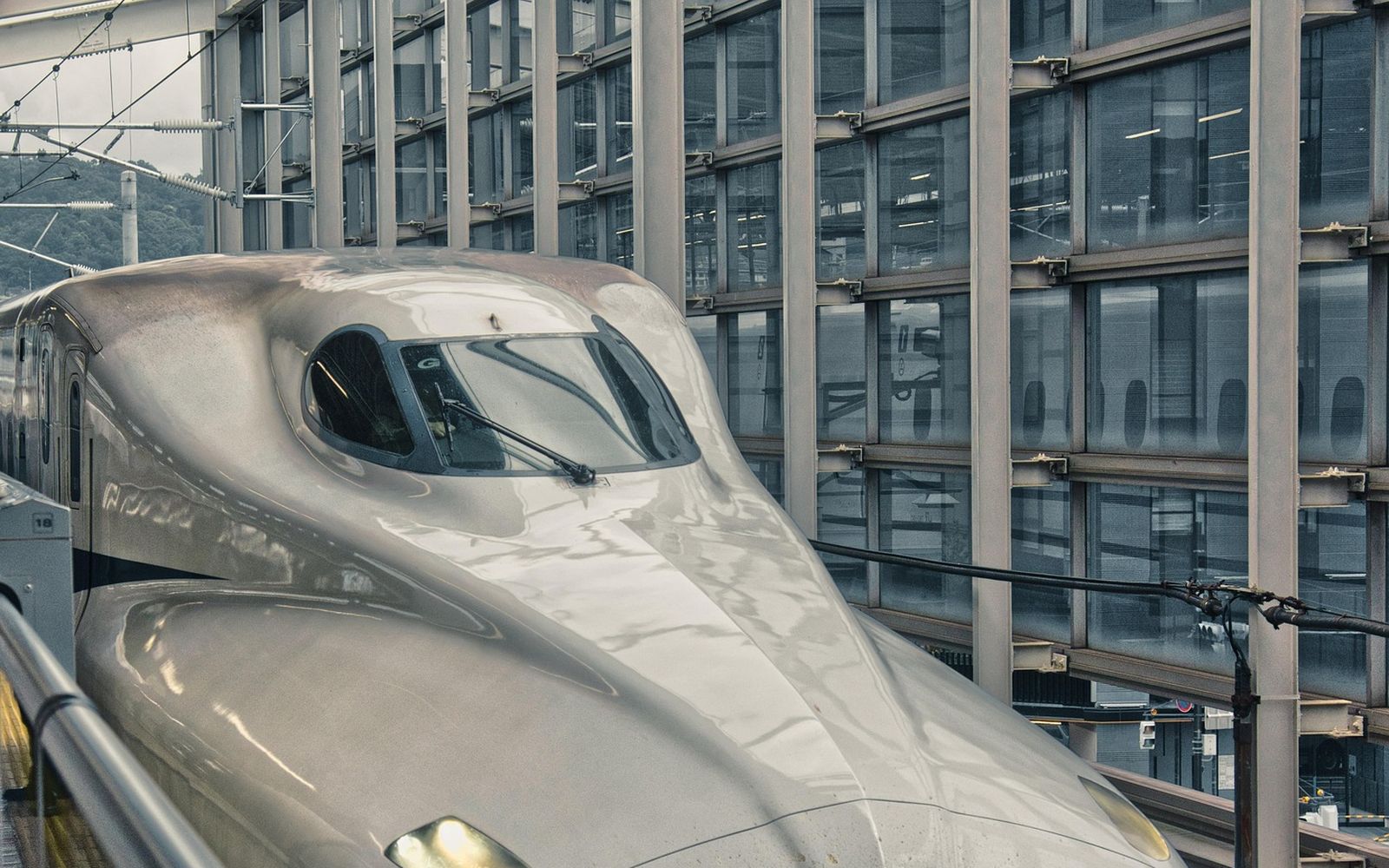
Photo: Pixabay
Three trains, one track
Every Tokyo to Kyoto train runs on the same line with the same carriages. The only difference is how many times it stops.
| Train | Time | Reserved | Non-reserved |
|---|---|---|---|
| Nozomi | About 2 hr 10 | ¥14,170 | ¥13,320 |
| Hikari | About 2 hr 40 | ¥13,850 | ¥13,320 |
| Kodama | About 3 hr 30 | ¥13,850 | ¥13,320 |
Reserved seats cost a few hundred yen more than non-reserved and rise slightly at New Year, Golden Week and Obon, when Nozomi trains go fully reserved. Outside those weeks a non-reserved seat is usually fine, though with luggage and a long ride, paying the difference is money well spent.
Which seat, and when Fuji appears
Heading west from Tokyo, Mount Fuji is on the right. Ask for seats D or E and you are on that side; the mountain comes into view roughly forty minutes out, after Shin-Fuji, and stays there for a few minutes.
Winter mornings give the best odds. In summer it is usually hidden, and no amount of seat selection fixes cloud.
Is a rail pass worth it?
Do the arithmetic rather than assuming. A Tokyo to Kyoto return is roughly ¥28,000. A nationwide rail pass costs more than that, so it only pays off if you are covering serious additional distance: Hiroshima, Kanazawa, Tohoku, or several regions in a week.
One catch that surprises people: the nationwide pass does not include Nozomi trains without an extra supplement. Hikari and Kodama are included, which is why pass holders take Hikari and arrive half an hour later. Pass prices and rules have changed more than once in recent years, so check the current terms before you buy.
For a two-city trip — Tokyo, Kyoto, back — buying individual tickets is almost always cheaper. Regional passes covering just Kansai or just the Tokyo area are a different matter and can be excellent value.
Large luggage needs a reservation
On this line, bags over 160 cm in total dimensions need a reserved seat in the oversized baggage area, booked in advance and at no extra cost if you do it when you reserve. Turn up with an unbooked large case and you may be charged and moved.
The simpler answer, again, is forwarding: send the case from your Tokyo hotel to your Kyoto inn the day before, and travel with a small bag. Most ryokan will hold it until you arrive.
Breaking the journey
The train passes two ryokan regions on the way. Hakone is reached from Odawara, about half an hour out of Tokyo, and Atami is the next stop after that. Stopping for a night on the return leg costs an afternoon and turns a transfer into the best part of the trip.
Our comparison of the two regions covers which to pick if you only have one night.
Questions people actually ask
- Should I book in advance?
- Outside peak weeks, no. Trains leave every few minutes and non-reserved cars are rarely full. Around the New Year, Golden Week and mid-August holidays, book as early as you can.
- Tokyo Station or Shinagawa?
- The fare is the same and Shinagawa is ten minutes closer to Haneda. If you are coming from the south or west of the city, use Shinagawa.
- Is there food on board?
- A trolley service, and far better options on the platform and in the station. An ekiben lunch box eaten at 300 km/h is a legitimate reason to take the train.
- What about the night bus?
- Around a quarter of the price and eight hours overnight. It saves a hotel night, but arriving at dawn without sleep is a poor start to a ryokan stay, where the whole point is the evening.
- Can I get to Kyoto by plane?
- Not directly — you would fly to Osaka and take a train in. Once airport transfers are counted, the shinkansen is faster city centre to city centre.
Where will you sleep in Kyoto?
The districts are closer together than they look, and which one you choose decides your mornings.